Slovenia Hiking Packing List by Route and Season
Editorial note: Canopy Trips has no paid placement in this guide. Booking.com approval is pending, and this page contains no Booking.com affiliate links.
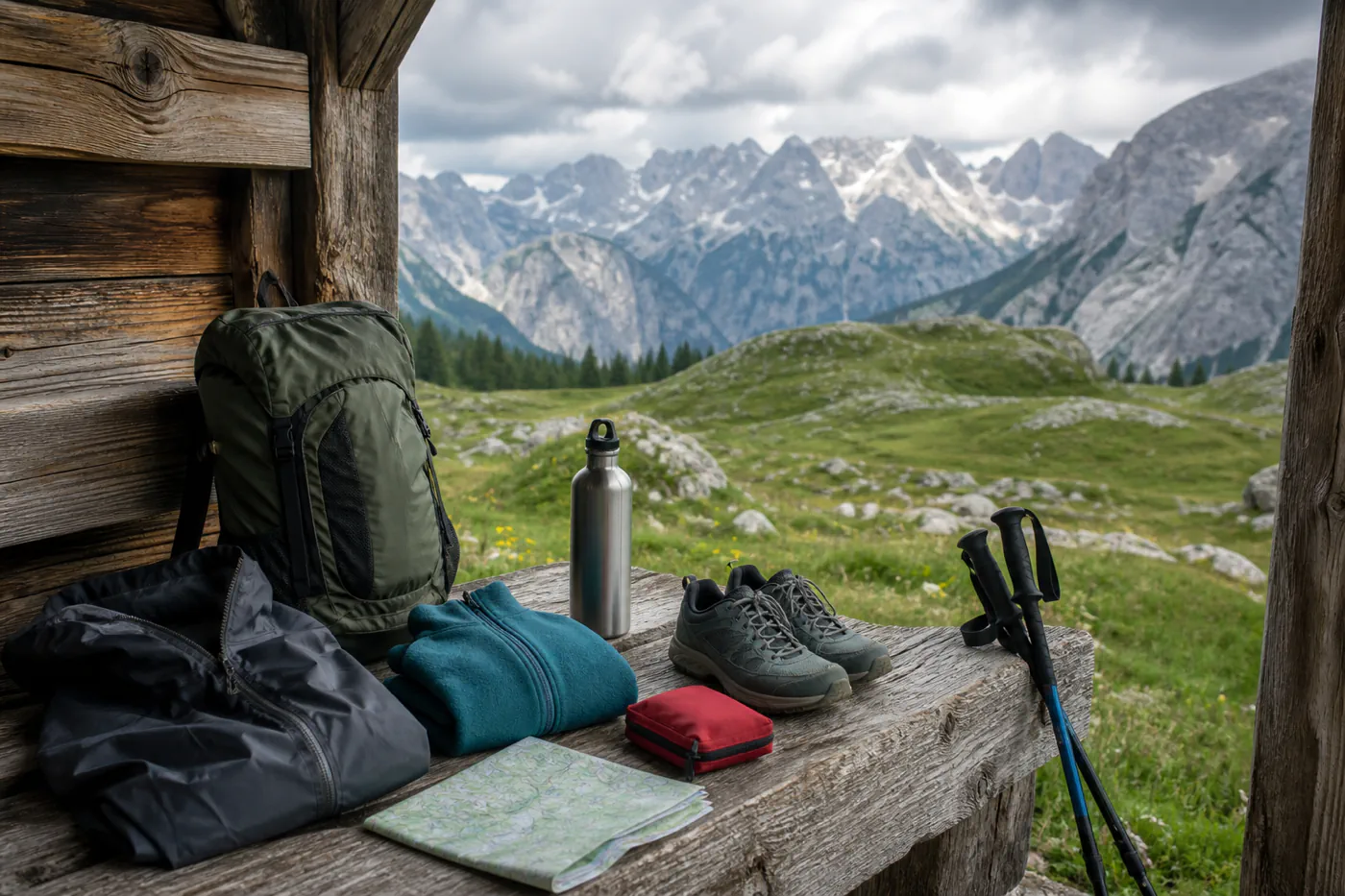
Pack for the hardest verified condition on the route, not the valley forecast. A Lake Bled walk, a Bohinj valley trail, a protected high-mountain route, and a Soča river outing require different footwear, layers, equipment, and skill. The list begins after choosing the trail and checking its current condition.
How this page was built: This guide uses Triglav National Park mountain-safety guidance, the Slovenian Tourist Board hiking guide, the national weather service, and Bohinj visitor rules. It recommends functions and decisions rather than inventing product testing. Current prices, schedules, inventory, wildlife conditions, certifications, and access rules are not treated as permanent facts.
The short answer
For a marked nontechnical day hike, carry broken-in footwear suited to the surface, a small pack, weather layers, rain protection, sun protection, enough water and food, navigation that works offline, a charged phone and backup power, a compact first-aid kit, light, identification, and any personal medication. Add technical gear only when the official route grade and competent use require it. Reuse equipment that already fits; do not buy a mountain-looking item that is unsuitable for the route.
Pack by risk and route evidence
| Need | Typical day-hike answer | Reason to change it |
|---|---|---|
| Footwear | Broken-in trail shoes or boots with grip | Snow, scree, mud, exposure, or load |
| Layers | Warm layer plus shell | Altitude, wind, cold front, or shoulder season |
| Water and food | Route-specific supply with reserve | No verified refill or open hut |
| Navigation | Offline map plus route notes | Complex terrain may require stronger tools and skill |
| Technical kit | None for an easy marked walk | Official difficult route and trained use |
Route grade decides the equipment ceiling
Read the current official or Alpine Association route description and the park’s trail classification. Easy, difficult, and very difficult trails are not marketing labels. Protected sections may require a helmet, harness, and self-protection equipment plus the knowledge to use them. Do not add technical gear as a substitute for training or a guide. If the route exceeds the group’s experience, choose a lower objective. Carrying more equipment cannot make poor judgment, lightning, or an official closure safe.
Layer for altitude and waiting
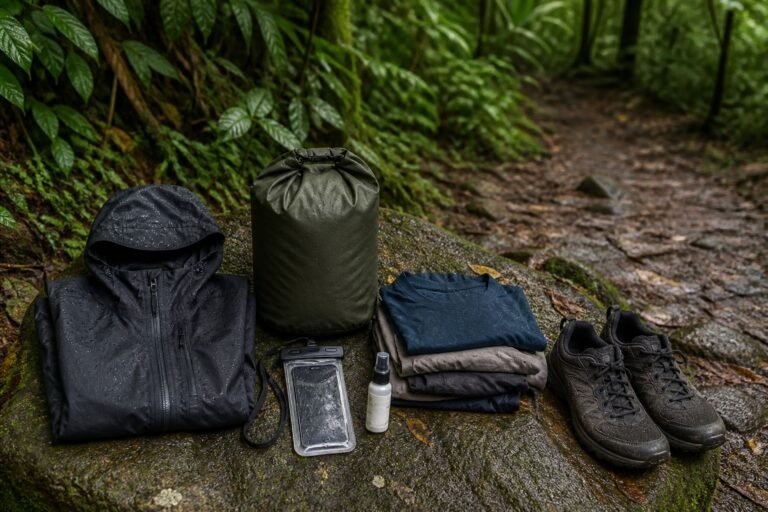
Mountain temperature, wind, rain, and cloud can differ sharply from the departure town. Pack a moisture-managing base, insulating layer, and wind or rain shell appropriate to the forecast, plus sun protection. Include gloves and a warm hat when elevation or season supports them. Public-transport hikers also need clothing for waiting at an exposed stop after the walk. Keep the warm and emergency items dry in an internal bag. Cotton-heavy spare clothing can become cold when wet.
Water, food, and huts require verification
Do not assume a mountain hut, spring, cable car, or restaurant will be open or safe as the only water source. Verify operating status and route-specific refill information, then carry enough water for heat, effort, and delay. Bring food that remains usable if the return slips. Pack out all waste, including food scraps and wipes. A reusable bottle is useful only when its capacity matches the day. Water treatment choice depends on the source hazard and should not be guessed from clear appearance.
Navigation and communication need redundancy
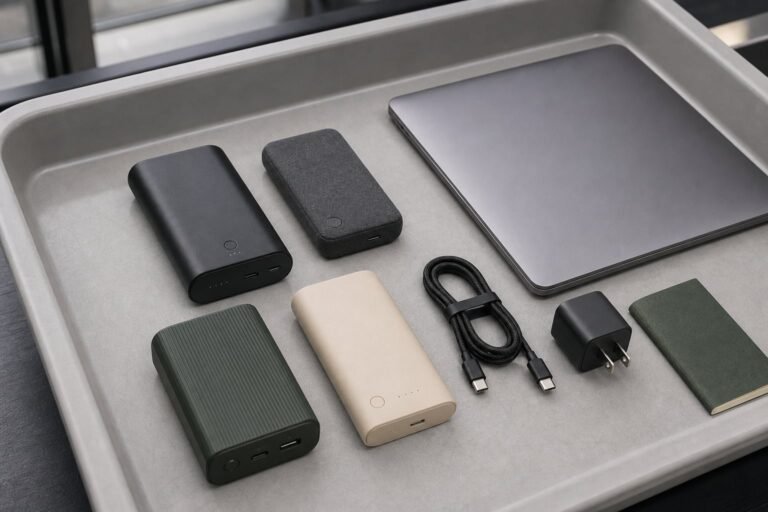
Download the route and relevant map before leaving coverage. Carry the phone in a protected pocket, preserve battery, and add a small power bank for a long day. A paper overview can help when electronics fail, but it must be detailed enough to support the route. Tell a responsible person the trail, direction, transport, and expected return. Carry a light even when the plan ends before dark, plus a basic first-aid kit, emergency insulation, identification, and personal medication.
Transit changes what stays in the pack
A bus or train day needs the ticket method, offline timetable, stop name, last return, and enough cash or payment backup for the current system. Keep wet or muddy gear contained without blocking other passengers. Trekking poles may need to be collapsed and protected. Do not leave critical layers or medicine in luggage storage. If the route ends at a different stop, verify that the service accepts the equipment carried and build a delay margin that does not require running from the trail.
Night-before packing audit
- Recheck route grade, trail condition, weather, daylight, and official warnings.
- Pack footwear and layers for the hardest credible surface and exposure.
- Verify water, food, hut, and cable-car assumptions before reducing reserves.
- Store offline navigation, emergency contacts, transport, and return details.
- Remove duplicate gear and technical equipment the hiker cannot use correctly.
When the list cannot make the route suitable
Change or cancel the hike when the official grade exceeds experience, the forecast or trail status is adverse, essential equipment is missing, footwear is untested, or the return depends on an unsafe pace. Rent specialist equipment only from a provider that fits and explains it. Hire a qualified guide when the route requires guidance, not as a way to ignore preparation.
Claim ledger and primary sources
Each source below supports a named planning fact, not a general sustainability endorsement. Marketplace inventory is commercial information and does not verify an operator’s wildlife, labor, or environmental claims.
- Triglav National Park mountain safety Used for route classification, equipment, and preparation; recheck before every hike.
- Slovenia official hiking guide Used for national hiking safety and equipment guidance; recheck annually.
- Slovenian National Weather Service Used for forecast, radar, and warnings; recheck before every hike.
- Bohinj visitor guidelines Used for waste, camping, swimming, dog, and trail conduct; recheck annually.
Continue with public-transport day hikes, Soča Valley without a car, Bled versus Bohinj.