Slovenia Green Labels: What Travelers Can Verify
Editorial note: Canopy Trips has no paid placement in this guide. Booking.com approval is pending, and this page contains no Booking.com affiliate links.
A Slovenia Green label is a verification lead, not a complete verdict on a trip. The national Green Scheme covers destinations and several provider categories, including accommodation, attractions, agencies, parks, restaurants, and other tourism services. The label’s meaning depends on the exact category, current status, and underlying evidence.
How this page was built: This guide uses the Slovenian Tourist Board’s Green Scheme description, current award release, accommodation directory, and labeled-destination resources. It does not convert participation into an unsupported best or zero-impact claim. Current prices, schedules, inventory, wildlife conditions, certifications, and access rules are not treated as permanent facts.
The short answer
Match the exact legal provider or destination to the current official scheme entry, record the label category and checked date, then find the underlying certification or criteria where the scheme identifies one. Use the result to ask better questions about the booking. Do not assume that a labeled destination certifies every business inside it, that a labeled hotel solves transport emissions, or that a restaurant, attraction, and accommodation label measure identical things.
Read each label at its actual scope
| Label subject | What it can help verify | What it cannot prove alone |
|---|---|---|
| Destination | Municipal or destination-management process | Every local business is sustainable |
| Accommodation | Named property’s scheme status | Best location, labor, or room for every traveler |
| Attraction or park | Named site’s participation and category | Every tour or transport provider meets the same standard |
| Agency | Named agency’s current status | Every subcontractor or itinerary claim |
| Restaurant | Named food business’s scheme status | Every ingredient or meal has low impact |
Start with identity, category, and date
Search the official scheme by the exact provider name rather than a similar hotel, brand, town, or booking listing. Record whether the entry applies to a destination, accommodation, attraction, agency, park, restaurant, beach, or another category. Note the date checked and any level or underlying certificate shown. If the property changed name or operator, ask for confirmation. A logo copied into a marketplace photo or footer is not enough evidence of current participation.
A destination label is not a property label
Destination management can address planning, measurement, mobility, resident engagement, conservation, and visitor communication at a broad scale. It does not certify every room, tour, shop, or meal within the boundary. A traveler can still use the destination entry to find public transport, conduct rules, or local initiatives, then verify the chosen provider separately. Avoid describing an entire trip as sustainable merely because one town holds a label. Transport and behavior remain material parts of the route.
Ask operational questions after verification
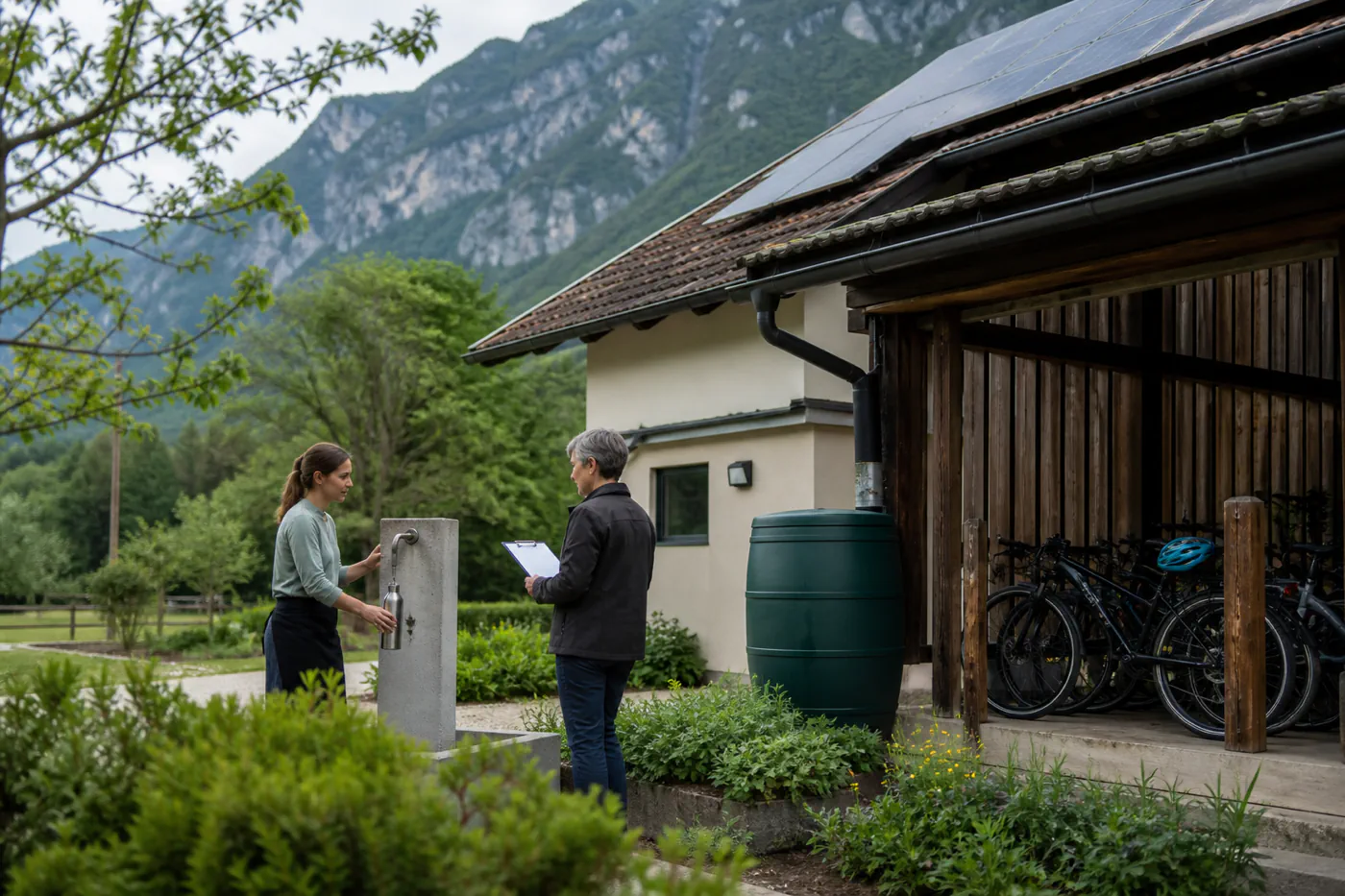
For accommodation, ask about the exact room, heating and cooling, refill access, linen schedule, food-waste practice, bicycle storage, public-transport directions, and accessibility. For an activity, ask about group size, guide qualification, wildlife conduct, route, equipment, and local restrictions. For a restaurant, dietary fit and food-safety needs still matter. The label narrows the evidence search; it does not replace a contract, current operating details, or the traveler’s own impact choices.
Reject the green halo
Terms such as eco, green, natural, local, or responsible are not interchangeable with a current named certification. Look for the precise claim, evidence owner, measurement period, and limitation. Solar panels do not establish water practice; local food does not establish labor conditions; a car-free city stay does not erase a flight. Present the strongest verified fact in plain language and leave the unresolved parts unresolved. That approach is more useful than awarding an unsourced sustainability score.
Five-minute label check
- Match the exact legal provider or destination in the official directory.
- Record the category, level if shown, underlying evidence, and checked date.
- Separate destination participation from the selected property’s status.
- Ask operational questions tied to the actual room, meal, activity, or route.
- Avoid best, zero-impact, and whole-trip claims the label does not support.
When a green claim should not affect the booking
Do not pay more for a logo that cannot be matched to a current official entry or explained at a clear scope. Do not reject an unlabeled small provider automatically when it can document strong practices relevant to the booking. Location, accessibility, safety, cancellation, and total transport can outweigh a label for an individual trip.
Claim ledger and primary sources
Each source below supports a named planning fact, not a general sustainability endorsement. Marketplace inventory is commercial information and does not verify an operator’s wildlife, labor, or environmental claims.
- Green Scheme of Slovenian Tourism Used for official programme purpose, categories, and directory; recheck quarterly.
- 2026 Slovenia Green label awards Used for current award cycle and named category context; recheck annually.
- Slovenia Green accommodation Used for current labeled-property discovery; recheck before every booking.
- Slovenia Green destinations Used for destination-level scheme examples; recheck quarterly.
Continue with car-free lodging decisions, route transport decision, car-free itinerary.