Table Mountain Cableway vs Guided Hike
Affiliate disclosure: This guide contains a marked Viator booking link assigned to an independent travel advisor affiliated with Fora Travel. The advisor may earn a supplier commission from a completed booking at no added cost to you. Availability, prices, operator claims, inclusions, and cancellation terms remain the responsibility of Viator and the listed operator.
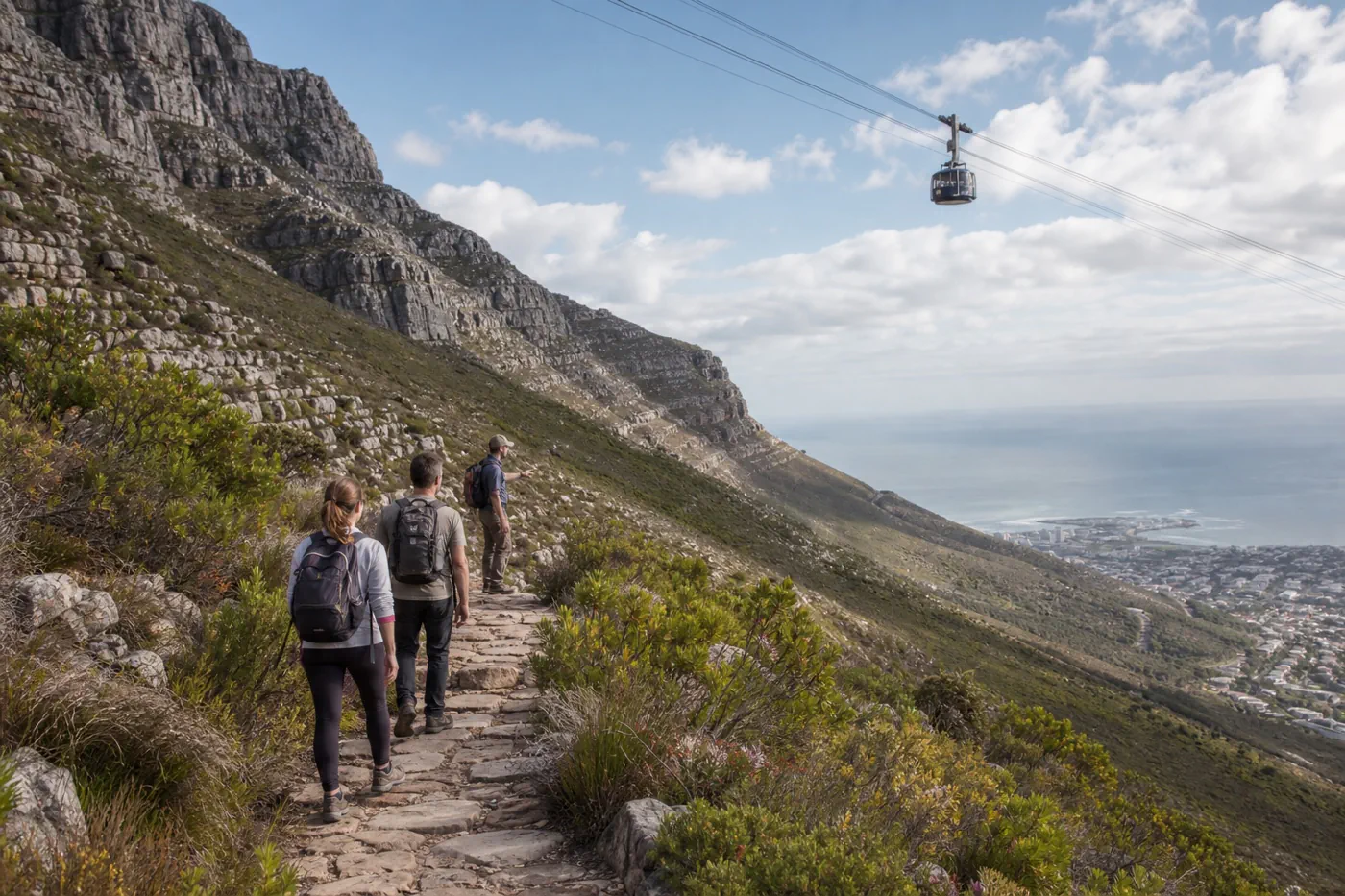
The cableway and the hike require separate go or no-go decisions. The cableway can close for weather or operations. Trails can remain open while conditions are unsuitable for a particular group. A mixed plan that hikes up and rides down is only workable when the descent remains safe if the cableway never opens.
How this page was built: This guide uses the live cableway site plus SANParks hiking, permit, safety, and notification guidance. No static operating schedule or universal easy route is published because weather, maintenance, fire, trail condition, and group ability can change the answer. Current prices, schedules, inventory, wildlife conditions, certifications, and access rules are not treated as permanent facts.
The short answer
Use the cableway when the live status, queue, visibility, and ticket terms fit. Choose a guided hike when the route matches the group’s fitness and the guide supplies a clear weather, emergency, and descent plan. Choose a mixed plan only when everyone can safely reverse or descend by trail if the cableway closes.
Choose the ascent and descent separately
| Plan | Best fit | Failure point |
|---|---|---|
| Cableway up and down | Short visit with live operation confirmed | Wind, maintenance, queue, visibility, ticket terms |
| Guided hike up and down | Group wants route interpretation and can meet fitness demand | Weather, daylight, pace, emergency response |
| Hike up, cableway down | Capable group with a safe trail descent fallback | Cableway closes after the ascent |
| Cableway up, hike down | Route and knees suit a technical descent | Underestimating navigation and downhill load |
| Postpone | Conditions or group readiness are wrong | Pressure from a fixed booking |
Live status outranks a saved itinerary
Check the cableway’s official status near departure and again before reaching the lower station. Read the ticket’s validity and refund terms. Do not assume a weather closure will end quickly, and do not start an unplanned hike because the cableway is closed.
A guided hike still needs specific answers
Ask for the named route, elevation gain, expected moving time, technical sections, exposure, scrambling, meeting point, maximum group size, guide qualification, first-aid plan, emergency communication, water, clothing, and turnaround criteria. Marketing labels such as moderate are not enough.
Plan the downhill before starting
Descending can be harder on knees and concentration than ascending. Everyone should know the trail-descent fallback if the cableway stops. Carry enough water, layers, sun protection, light, offline navigation, charged communication, and any personal medication for a longer day than expected.
Group safety matters more than the summit
SANParks recommends hiking in a group and staying alert. Turn around when weather, daylight, route finding, injury, or pace removes the margin. Reaching the top is never the responsible goal when the descent is becoming uncertain.
Mountain plan check
- Check live cableway status, queue guidance, and ticket terms.
- Name the hiking route and obtain an honest difficulty description.
- Verify guide qualification, group size, first aid, and emergency process.
- Carry a safe descent plan that does not depend on the cableway.
- Recheck SANParks notices, weather, fire, and trail information on the day.
When to postpone the mountain
Postpone when wind, heat, cloud, fire, trail condition, daylight, or group readiness removes the safety margin. Use a lower-elevation Cape nature plan rather than treating a cableway closure as an invitation to improvise a hike.
Inspect a current guided summit hike
Check the named route, meeting point, duration, elevation, scrambling, group size, guide qualification, equipment, weather decision, cableway assumptions, descent plan, accessibility, and cancellation.
Review a current guided Table Mountain hike
Claim ledger and primary sources
Each source below supports a named planning fact, not a general sustainability endorsement. Marketplace inventory is commercial information and does not verify an operator’s wildlife, labor, or environmental claims.
- Table Mountain Aerial Cableway Used for official live operating status, tickets, and visitor guidance; recheck immediately before publication and same day.
- SANParks Table Mountain hikes and trails Used for official hiking and trail context; recheck immediately before publication and quarterly.
- SANParks Table Mountain cards and permits Used for official access and permit starting point; recheck immediately before publication and quarterly.
- SANParks activity permit and safety FAQ Used for official mountain safety and permit guidance; recheck immediately before publication and quarterly.
- SANParks notifications Used for current fire, closure, and access changes; recheck immediately before publication and same day.
Continue with Cape Town without a car, Cape Point and Boulders decision, Ten-day South Africa nature route.