Kruger Self-Drive vs Guided Safari: Choose by Trip
Affiliate disclosure: This guide contains marked Viator and Travelpayouts booking links. The Viator link is assigned to an independent travel advisor affiliated with Fora Travel. The other booking link is provided through Travelpayouts. A qualifying booking may generate a commission at no added cost to you. Availability, prices, operator claims, inclusions, and cancellation terms remain the responsibility of the linked marketplace or provider.
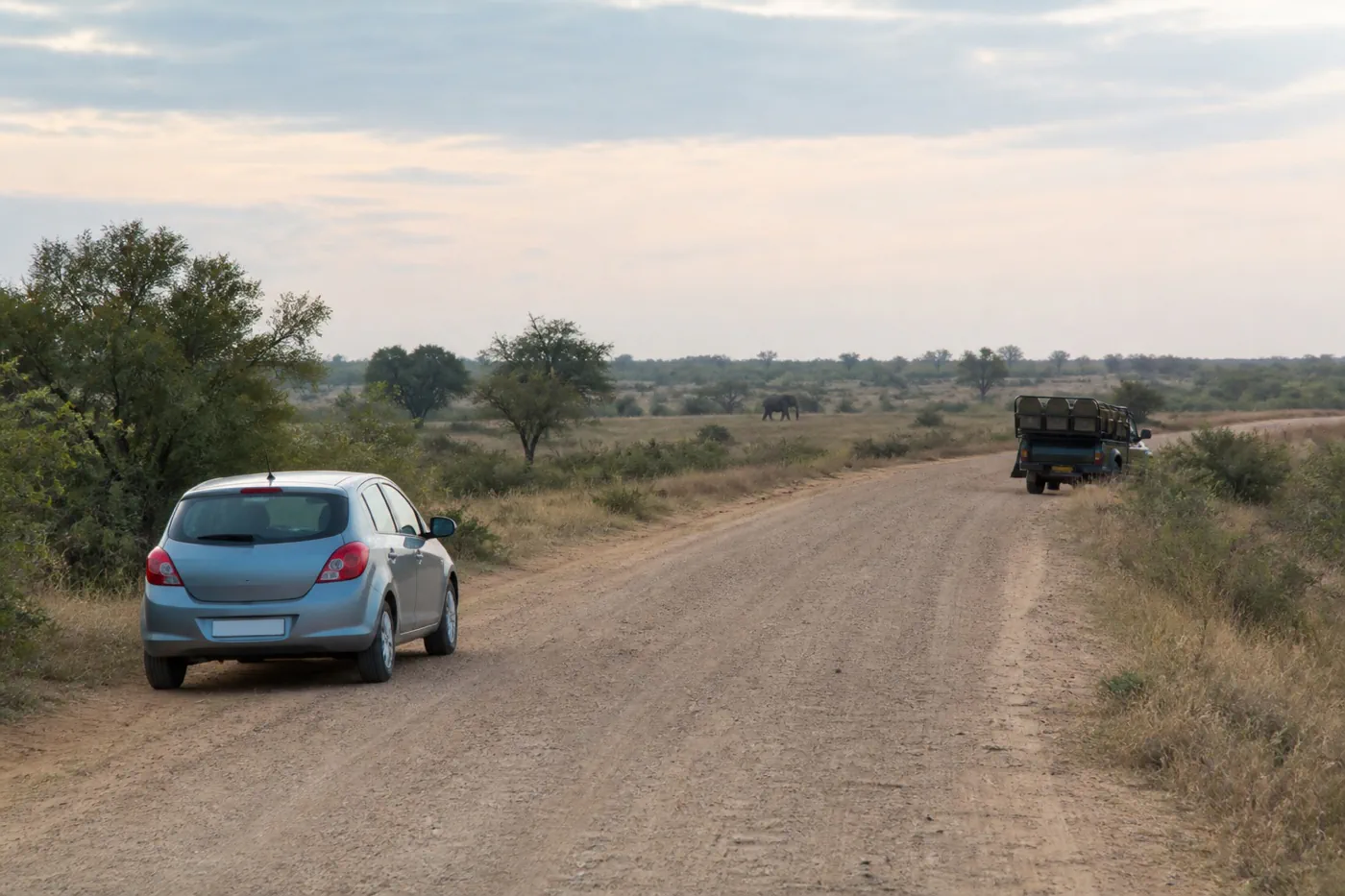
The strongest first Kruger trip often uses both formats. Self-drive gives control over pace, route, and rest. A guided drive adds a trained driver, an open vehicle on many products, and less navigation work. Neither format guarantees sightings, and neither should be chosen from the vehicle photo alone.
How this page was built: This comparison uses SANParks rules, gate information, day-visitor guidance, and the official game-drive page. Product inclusions, pickup, entry fees, vehicle type, accessibility, and cancellation must be checked on the exact travel date. Current prices, schedules, inventory, wildlife conditions, certifications, and access rules are not treated as permanent facts.
The short answer
Self-drive when the group is comfortable with left-side driving, park navigation, long observation periods, and strict gate deadlines. Choose a guided drive when nobody should drive, the group values interpretation, or an early or late activity is available under current park rules. For many first visits, book one guided drive and keep the remaining sessions independent.
Match the safari format to the actual constraint
| Decision | Self-drive | Guided drive |
|---|---|---|
| Pace | Stop, wait, and reroute within legal access | Route and timing led by guide or operator |
| Field work | Traveler scans, identifies, and navigates | Guide supports scanning and interpretation |
| Vehicle | Enclosed rental or private vehicle | Confirm open or closed vehicle and seating |
| Cost | Vehicle, fuel, rental terms, fees | Per-seat or private vehicle price and inclusions |
| Fatigue | Driver carries navigation and gate responsibility | Pickup and return still require schedule margin |
| Sightings | Never guaranteed | Never guaranteed |
Gate time is a hard operating limit
Build each self-drive backward from the current camp or exit gate deadline. Allow for a slow sighting, wrong turn, road condition, comfort stop, and congestion. A route that works on a map can fail when it requires continuous driving or reaches a gate at the closing minute.
A guide changes attention, not nature
A guide can handle the vehicle, read signs, explain behavior, and help the group observe. That is useful even when no major animal appears. Reject any listing that markets wildlife as guaranteed. Ask how the guide handles crowded sightings, off-road limits, quiet observation, and species welfare.
Compare complete costs
For self-drive, include the vehicle, insurance decision, fuel, conservation fees, child restraints, and any one-way or airport costs. For a guided product, confirm park entry, pickup radius, transfer time, vehicle, group size, meals, age limits, accessibility, and gratuities. A family may price differently from a solo traveler.
Use a mixed plan deliberately
A guided session early in the stay can improve orientation without surrendering the whole itinerary. Keep an independent session for patient stops and a rest block during the hottest part of the day. The point is not to collect drives. It is to create attentive time in the park without exhausting the driver or passengers.
Safari format check
- Verify current gate hours, day-visitor rules, and conservation fees.
- Confirm whether the guided price includes entry and hotel pickup.
- Ask for vehicle type, seat layout, shade, toilet stops, and group size.
- Price the self-drive contract, fuel, insurance choice, and child restraints.
- Keep expectations centered on observation, not guaranteed species.
When not to self-drive
Choose a guide when no traveler is comfortable with left-side driving, early starts, wildlife-road behavior, or strict gate timing. Skip a guided product when the pickup creates excessive transit, the inclusions are unclear, or the operator promises a sighting that cannot be guaranteed.
Inspect a current full-day guided option
Check the listing for exact pickup radius, park entry, vehicle, group size, age limits, accessibility, meals, toilet stops, cancellation, and return time. Compare those inclusions with the complete self-drive cost.
Review a current guided Kruger safari
Compare a rental only after choosing the safari format
Search the exact airport, dates, driver age, transmission, luggage, and border needs. Read the supplier, insurance, deposit, mileage, road-use, and after-hours terms before choosing self-drive.
Compare current South Africa rental options
Claim ledger and primary sources
Each source below supports a named planning fact, not a general sustainability endorsement. Marketplace inventory is commercial information and does not verify an operator’s wildlife, labor, or environmental claims.
- SANParks Kruger day visits Used for official visitor limits and day-entry process; recheck immediately before publication and monthly.
- SANParks Kruger entrance gates Used for official gate identity and operating information; recheck immediately before publication and monthly.
- SANParks Kruger game drives Used for official guided activity context; recheck immediately before publication and monthly.
- SANParks Kruger useful information Used for official park rules and visitor responsibilities; recheck immediately before publication and quarterly.
Continue with Kruger versus Sabi Sands, Kruger gate and camp planner, Compare outside-park bases.