Hol Chan vs Mexico Rocks vs South Water Caye
Affiliate disclosure: This guide contains a marked Viator booking link assigned to an independent travel advisor affiliated with Fora Travel. The advisor may earn a supplier commission from a completed booking at no added cost to you. Availability, prices, operator claims, inclusions, and cancellation terms remain the responsibility of Viator and the listed operator.
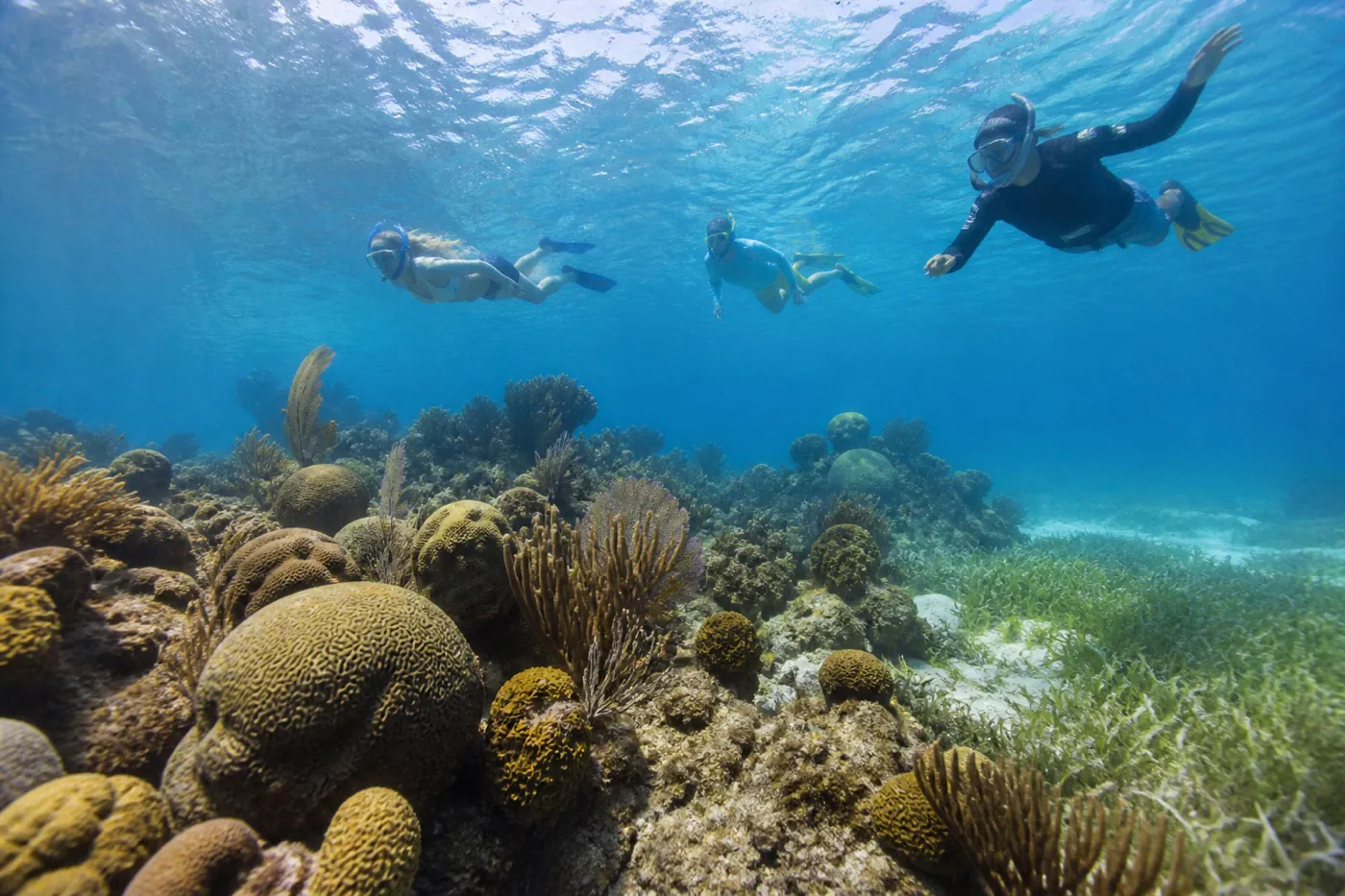
The best reef site is the one the selected base can reach responsibly on the actual day. Hol Chan, Mexico Rocks, and South Water Caye are not interchangeable product names. They use different departure bases, reserve systems, boat plans, habitats, fees, and operator inventories. Weather and water conditions can change the answer after the hotel is booked.
How this page was built: This comparison uses Fisheries pages for Hol Chan, South Water Caye, and the national reserve system plus UNESCO documentation for the Belize Barrier Reef Reserve System. Marketplace descriptions are used only as current product leads, not conservation evidence. Current prices, schedules, inventory, wildlife conditions, certifications, and access rules are not treated as permanent facts.
The short answer
Use Hol Chan when a northern-caye base and its regulated reserve system fit the route. Use Mexico Rocks when an Ambergris departure offers the shallower patch-reef format the group wants and the operator identifies the legal site and rules. Use South Water Caye when Hopkins, Dangriga, or another southern route makes that reserve the coherent marine day.
Choose from base, reserve, and product structure
| Site | Route fit | Verify before booking |
|---|---|---|
| Hol Chan | Caye Caulker or Ambergris Caye route | Zone, admission, group, guide, wildlife practice, departure dock |
| Mexico Rocks | Ambergris Caye and a patch-reef day | Exact site, legal access, boat, depth, equipment, conditions |
| South Water Caye | Hopkins, Dangriga, or southern-coast route | Reserve, departure, boat plan, admission, weather and return |
Protected-area identity comes before wildlife photos
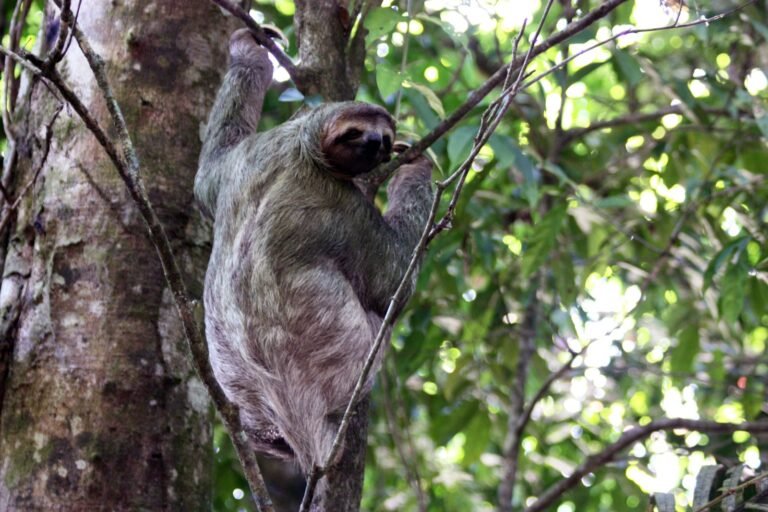
UNESCO describes a reserve system made of distinct protected areas. Ask which reserve and zone the boat enters and who manages it. A species collage cannot establish where the product operates, what admission covers, or how much of the day is travel, briefing, snorkeling, lunch, and return.
Departure base controls more than boat time
A northern-caye product and a southern-coast product begin from different hotel, dock, and weather systems. Confirm door-to-dock movement, check-in, toilet, shade, luggage storage, boarding, boat type, number of water entries, and return. Avoid crossing the country for a reef name when a suitable protected site fits the existing route.
Wildlife conduct can rule a product out
Ask about feeding, touching, chasing, crowding, anchoring, fish handling, and guaranteed-sighting language. Hol Chan publishes zone-specific rules and includes a managed wildlife-feeding context at Shark Ray Alley. Canopy Trips does not treat feeding or close contact as proof of a responsible wildlife trip.
Conditions and skill fit belong in the booking
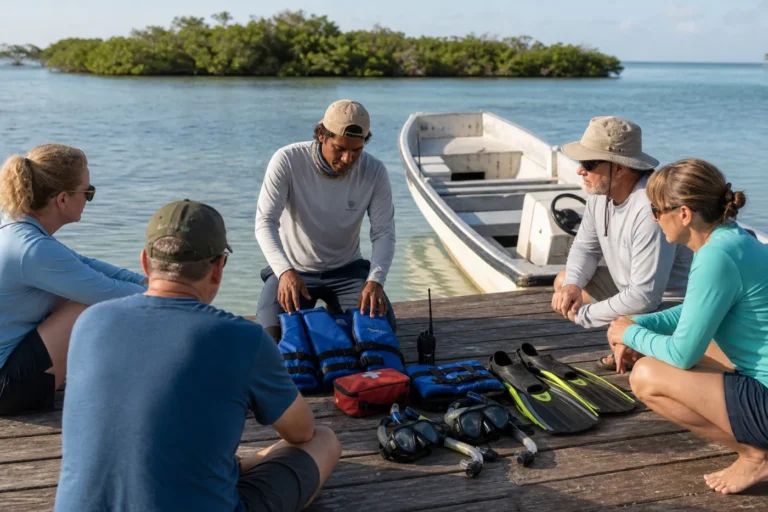
Ask the operator to describe likely depth, current, visibility limits, entry method, flotation, guide positioning, minimum swim ability, child policy, and an alternative when conditions are unsuitable. A beginner-friendly label does not replace a site-specific safety explanation.
Reef-day comparison check
- Name the reserve, zone, departure dock, and legal operator.
- Confirm admission, guide ratio, equipment, flotation, food, and toilet access.
- Ask about feeding, touching, chasing, anchoring, crowding, and wildlife guarantees.
- Match depth, current, entry, swim ability, and assistance to the group.
- Record the weather decision, substitute site, cancellation, and refund terms.
- Compare total door-to-door time from the booked room.
When to choose a shore or mangrove day instead
Skip the reef departure when conditions exceed the group’s ability, the operator will not name the site and wildlife practices, or a long cross-country transfer creates the only available date. A local shore, mangrove, cultural, or forest day can be the stronger purchase when the marine product needs perfect conditions.
Inspect one current Hol Chan product
Use the listing to inspect departure, reserve fee, guide, maximum group, equipment, water time, wildlife language, feeding context, weather handling, and cancellation. Verify reserve rules separately and compare another site only from the same hotel route.
Review a current Hol Chan snorkel tour
Claim ledger and primary sources
Each source below supports a named planning fact, not a general sustainability endorsement. Marketplace inventory is commercial information and does not verify an operator’s wildlife, labor, or environmental claims.
- Hol Chan Marine Reserve Used for official reserve zones, visitor rules and wildlife context; recheck immediately before publication.
- South Water Caye Marine Reserve Used for official southern reserve and management context; recheck before publication and quarterly.
- Belize Fisheries marine-reserve unit Used for national reserve identity and management starting point; recheck before publication and quarterly.
- UNESCO Belize Barrier Reef Reserve System Used for protected-area system and ecological context; recheck annually.
- Travel Belize district guide Used for northern-caye and Stann Creek route context; recheck quarterly.
Continue with northern-caye base comparison, reef operator checklist, ten-day Belize route.