Kruger vs Sabi Sands: Choose the Safari Format
Editorial note: Canopy Trips has no paid placement in this guide. Booking.com approval is pending, and this page contains no Booking.com affiliate links.
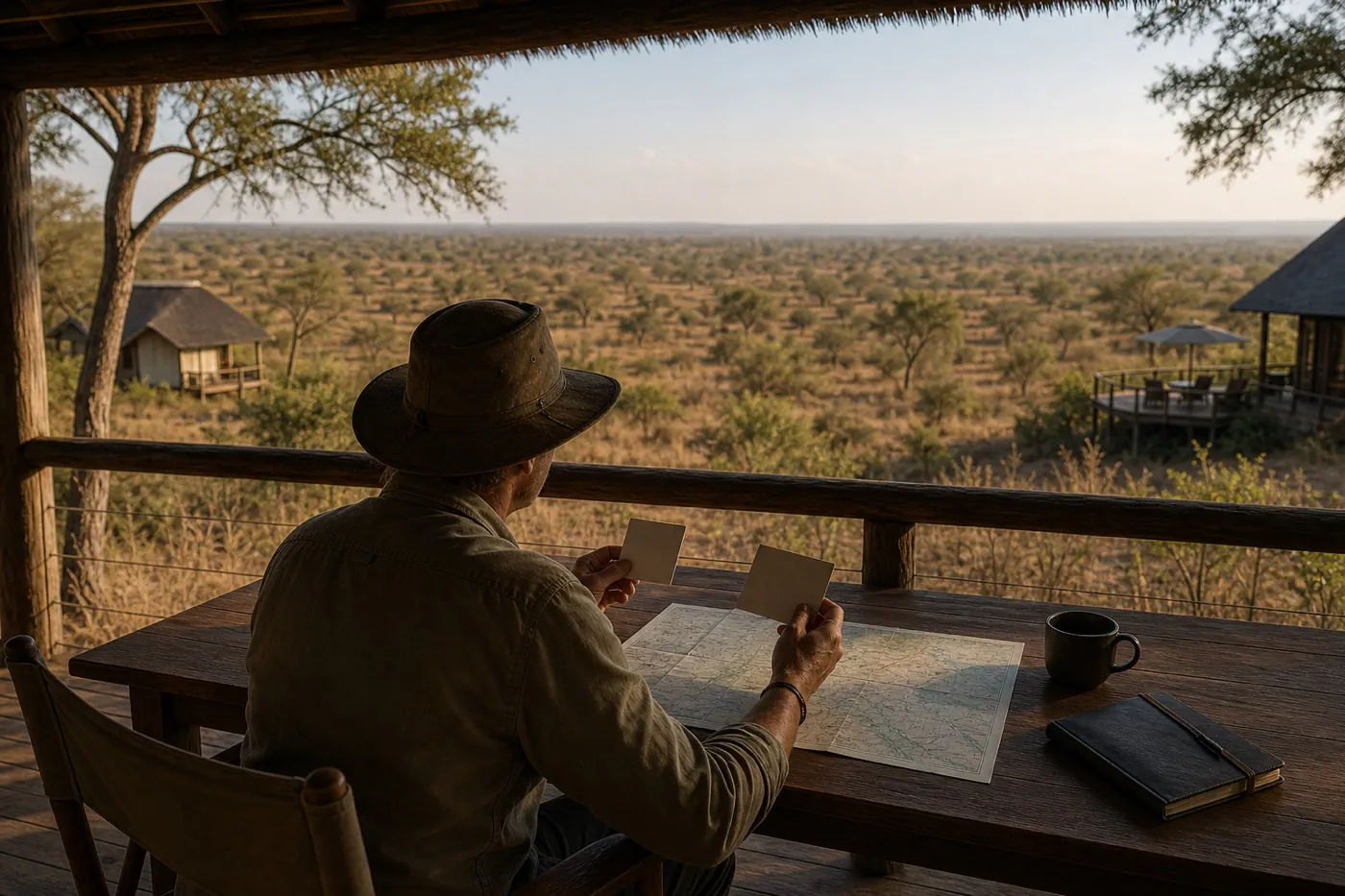
Kruger and Sabi Sands differ most in operating model, not in guaranteed animals. Kruger supports independent day access, public rest camps, and bookable park activities. Sabi Sand is a private reserve with separate lodges and lodge-led safari programs. Marketing shorthand hides important differences in price structure, vehicle practice, meals, transfers, and schedule control.
How this page was built: This guide compares the official Kruger visitor model with the Sabi Sand reserve and lodge directory. Because private-lodge policies vary, no reserve-wide claim is applied to every property. Each lodge must be checked on its own current terms. Current prices, schedules, inventory, wildlife conditions, certifications, and access rules are not treated as permanent facts.
The short answer
Choose Kruger for independent driving, public camp choices, and direct control over daily spending. Choose a Sabi Sand lodge when an integrated stay with scheduled drives, meals, and higher service is the priority. Split the stay only when the transfer is simple and each side receives enough time to feel different.
Compare the operating model
| Variable | Kruger National Park | Sabi Sand Nature Reserve |
|---|---|---|
| Access | Public park gates, camps, and day visits under SANParks rules | Access tied to a booked lodge or its approved arrangements |
| Driving | Independent drives plus bookable guided activities | Lodge-scheduled drives under property and reserve practice |
| Stay structure | Camp or lodge booked separately from many activities | Often packaged with meals and drives, but verify each lodge |
| Budget control | More line-item control | Higher bundled spend and fewer unbundled choices |
| Daily pace | Traveler sets most daylight rhythm | Lodge schedule anchors the day |
| Wildlife | Unpredictable | Unpredictable |
Ask what the lodge rate actually includes
Request the exact room, meal plan, number and length of drives, transfers, drinks, conservation or reserve levies, child policy, private vehicle option, cancellation, and gratuities. A phrase such as fully inclusive may still exclude meaningful parts of the trip.
Vehicle practice needs property-level verification
Ask about maximum guests per vehicle, seat assignment, shade, blankets, photography support, off-road practice, sighting etiquette, and how many vehicles approach one animal. Do not infer the answer from the reserve name. Written lodge policies and direct answers are more useful than a general safari label.
A split stay should change the experience
Use Kruger for independent routes and a Sabi Sand lodge for guided interpretation and a structured stay. Avoid moving for a single night after transfers and check-in are considered. Two or three nights on each side usually creates more usable field time than a series of lodge changes.
Responsible viewing still requires restraint
Neither access model removes the need for distance, quiet, and respect for animal movement. Avoid products that advertise touching, feeding, baiting, guaranteed sightings, or pressure on guides to crowd an animal. Ask how the lodge or guide responds when an animal changes behavior because of vehicles.
Reserve and lodge audit
- Compare identical dates and the complete party cost after every levy.
- Request an inclusions list for meals, drives, transfers, and drinks.
- Ask for vehicle occupancy, child policy, accessibility, and private-drive terms.
- Read conservation and community claims for specific mechanisms and reporting.
- Allow enough nights for the second format to justify the transfer.
When a split stay is not worth it
Stay in one format when the trip has three safari nights or fewer, when a transfer removes a prime drive, or when the private-lodge inclusions remain unclear. Choose the product whose access, pace, and complete cost fit the group, not the one with the stronger wildlife promise.
Claim ledger and primary sources
Each source below supports a named planning fact, not a general sustainability endorsement. Marketplace inventory is commercial information and does not verify an operator’s wildlife, labor, or environmental claims.
- SANParks Kruger National Park Used for official public-park visitor model; recheck before publication and quarterly.
- SANParks Kruger camps Used for official public accommodation range; recheck before publication and monthly.
- Sabi Sand Nature Reserve Used for official private-reserve overview; recheck before publication and quarterly.
- Sabi Sand lodge directory Used for official starting list for lodge-level verification; recheck before publication and monthly.
- Sabi Sand conservation program Used for official reserve conservation mechanisms; recheck before publication and annually.
Continue with Self-drive versus guided safari, Outside-park base comparison, Kruger gate and camp planner.