Wilderness vs Knysna vs Plettenberg Bay
Editorial note: Canopy Trips has no paid placement in this guide. Booking.com approval is pending, and this page contains no Booking.com affiliate links.
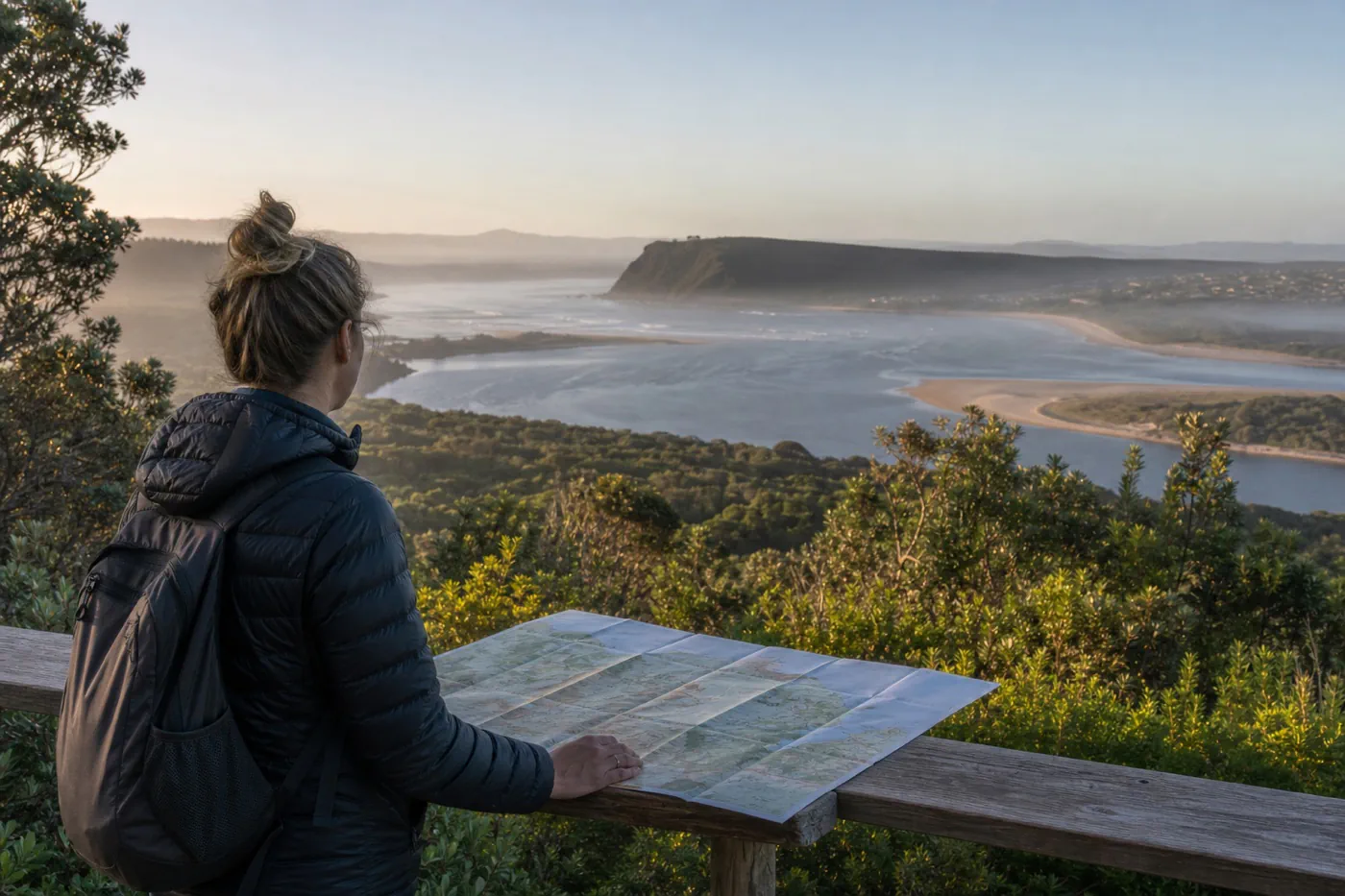
Choose the base from the activity map, not from a ranking of towns. Wilderness, Knysna, and Plettenberg Bay sit along the same broad route but serve different clusters of estuary, forest, beach, reserve, and Tsitsikamma plans. The right answer changes with the number of nights and which outing the group wants to repeat slowly.
How this page was built: This guide uses SANParks pages for Garden Route access, accommodation, and water activities, the official Knysna destination organization, South African Tourism, and CapeNature. Property details and local operators require direct current verification. Current prices, schedules, inventory, wildlife conditions, certifications, and access rules are not treated as permanent facts.
The short answer
Choose Wilderness for Touw River, lake, and western Garden Route access. Choose Knysna for a central estuary-and-forest base with more town services. Choose Plettenberg Bay for beaches, Robberg, Nature’s Valley, and a shorter eastern approach to Tsitsikamma. Split bases only when the trip has enough nights to recover the moving time.
Match the base to repeatable days
| Base | Best fit | Tradeoff to test |
|---|---|---|
| Wilderness | Touw River, paddling, birding, George access | Longer eastern day trips and property-to-village transport |
| Knysna | Estuary, forest, dining, central route position | Traffic, parking, and drive to far-east trailheads |
| Plettenberg Bay | Beaches, Robberg, Nature’s Valley, Tsitsikamma direction | Longer return to Wilderness and western stops |
| Two bases | Distinct western and eastern activity clusters | Packing, check-in gaps, and reduced rest time |
Start with three anchor outings
Choose the three nature outings the group would protect if weather or fatigue removed everything else. Plot their official entrances, activity start points, and closing constraints. Select the base that reduces repeated backtracking to those anchors rather than the town with the longest attraction list.
Wilderness favors water and a slower western rhythm
SANParks identifies paddling and river or lake activity in the Wilderness section, with park accommodation at Ebb-and-Flow. Verify current rentals, water conditions, activity operation, and the exact location of a private stay. A Wilderness address can still require a vehicle for groceries or evening dining.
Knysna works as a service-rich middle base
Knysna can connect estuary, forest, and town needs, and its official destination organization publishes current visitor information. Check whether the property is near the waterfront, the Heads, a forest road, or outside town. The municipal area is broad, so the accommodation name alone does not establish a short drive.
Plettenberg Bay supports the eastern nature cluster
Plettenberg Bay aligns with Robberg Nature Reserve, beaches, Nature’s Valley, and the approach toward Tsitsikamma. Verify CapeNature permits and trail conditions for Robberg and SANParks access for park sections. Keep marine-wildlife plans conditional on weather and responsible viewing rules.
A split needs enough nights
For four nights, one central base often preserves more usable time. With six or more nights and strong western and eastern priorities, a two-base plan can reduce repeated driving. Move once, in the direction of the departure point, and avoid turning the transfer day into a rushed checklist.
Garden Route base worksheet
- Plot the official entrance or meeting point for three anchor outings.
- Request the property’s exact map pin, parking, road, and evening transport options.
- Check current permits, fees, water activity, trail, and weather notices.
- Compare one-base driving with the time and cost of a hotel move.
- Place the final base toward the departure airport or onward route.
When not to split the stay
Use one base for four nights or fewer unless the arrival and departure naturally create two locations. Split only when the western and eastern activity clusters are both priorities and the move saves more repeated driving than it costs in packing and check-in time.
Claim ledger and primary sources
Each source below supports a named planning fact, not a general sustainability endorsement. Marketplace inventory is commercial information and does not verify an operator’s wildlife, labor, or environmental claims.
- SANParks Garden Route access Used for official position and access context for each park section; recheck immediately before publication and quarterly.
- SANParks Garden Route accommodation Used for official park stays in Wilderness, Knysna, and Tsitsikamma sections; recheck immediately before publication and monthly.
- SANParks Garden Route water sports Used for official paddling and estuary activity context; recheck immediately before publication and quarterly.
- Visit Knysna official destination site Used for official current Knysna visitor and service context; recheck before publication and quarterly.
- South African Tourism Plettenberg Bay Used for official national destination context; recheck annually.
- CapeNature Robberg Nature Reserve Used for official Robberg access and trail starting point; recheck immediately before publication and quarterly.
Continue with Self-drive versus guided Garden Route, Ten-day South Africa nature route, Cape Town without a car.