LifeStraw vs GRAYL: Go Series or GeoPress for Travel?
Affiliate disclosure: This guide contains marked affiliate links to Amazon. Canopy Trips may earn a commission from qualifying purchases at no added cost to you. As an Amazon Associate I earn from qualifying purchases. Recommendations are based on published specifications and source documents, not hands-on testing.
LifeStraw Go Series is the lighter choice when a microfilter matches your water source. GRAYL GeoPress adds a manufacturer-claimed virus barrier, with more weight and a shorter cartridge life. If your trip has a dependable supply of potable water, an ordinary reusable bottle may be all you need.
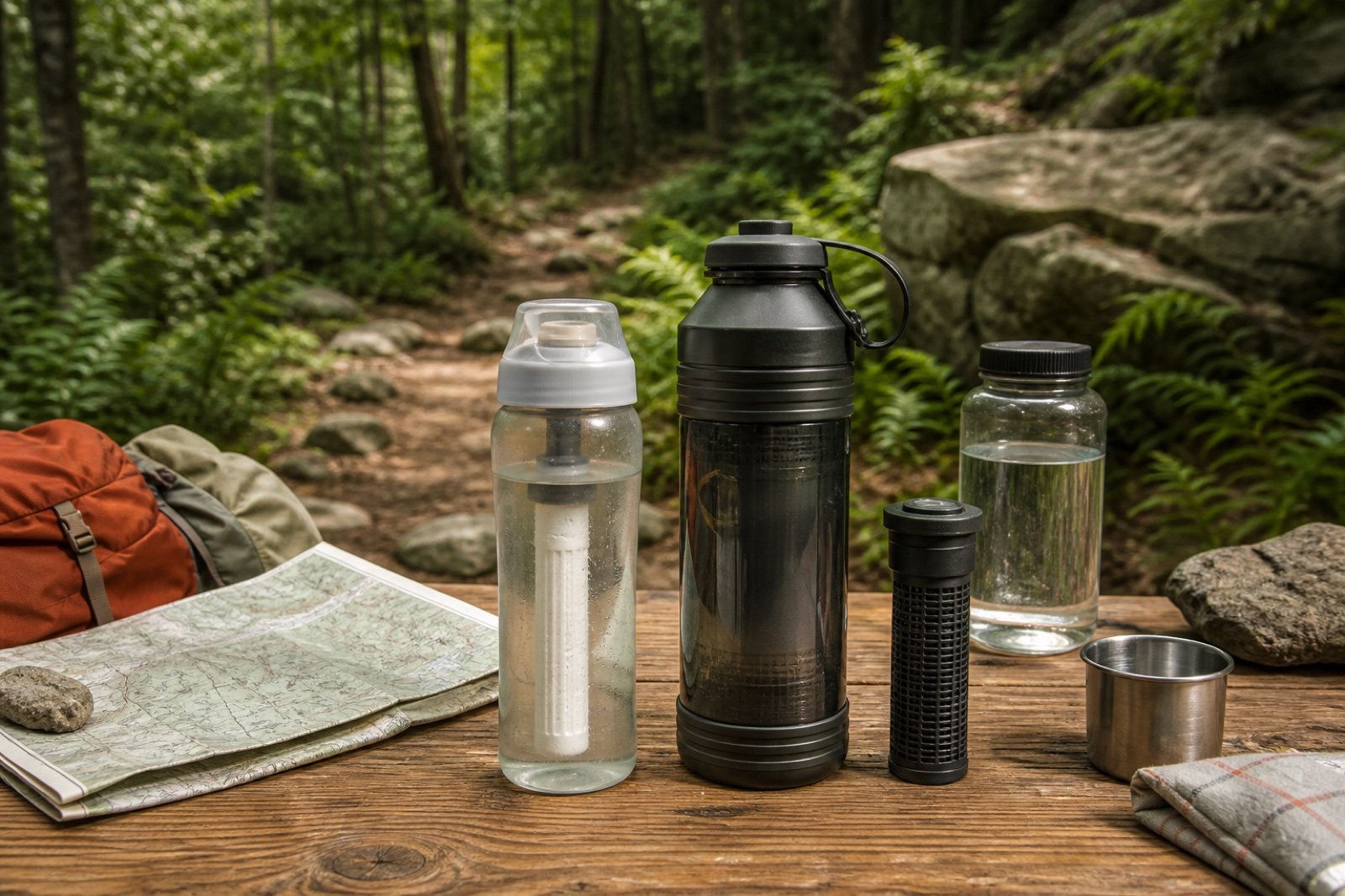
The names matter here. This comparison covers the plastic LifeStraw Go Series 1L with the covered, twist-off mouthpiece and the standard 24 oz / 710 ml GRAYL GeoPress. It does not compare the original LifeStraw straw, older flip-up Go bottles, insulated Go bottles, GRAYL UltraPress, or titanium GeoPress models.
How we compared: manufacturer specifications and manuals, replacement-part compatibility, published cartridge limits, and CDC travel-water guidance. We have not tested pathogen removal, taste, leaks, or pressing effort. Treatment claims below belong to the manufacturers; they are not a guarantee that either bottle makes any water safe.
Jump to: bottle comparison · choose by trip · replacement filters and costs · water-safety limits.
LifeStraw Go vs GRAYL GeoPress at a glance
| Bottle | Treatment scope | Capacity / empty weight | Published replacement limit | Purchase check |
|---|---|---|---|---|
| LifeStraw Go Series 1L | Microfilter for bacteria and parasites; carbon for taste. Does not remove viruses. | 1 L / 268 g | Membrane: up to 4,000 L. Carbon: up to 100 L, or about two months of regular use. | Choose the plastic 1L Go Series, not an older Go or an insulated model. |
| GRAYL GeoPress 24 oz | Purifier with manufacturer-claimed reduction of viruses, bacteria, and protozoan cysts. | 710 ml / 450 g | Up to 350 presses / 250 L; replace at the manufacturer’s slow-press cue or three years after first use. | Choose standard GeoPress; UltraPress and titanium bottles have different specifications. |
Weights are the manufacturers’ published empty-bottle figures, not our measurements. The GeoPress is 182 g heavier before water; the Go Series holds 290 ml more. Cartridge ratings describe different treatment jobs, so the larger liter number does not establish a safer or better bottle.
Which one belongs on your trip?
| Your water plan | Starting choice | Check before departure |
|---|---|---|
| Confirmed potable tap water or a dependable safe refill supply | Your existing reusable bottle. A treatment bottle is optional for taste preferences. | Current local notices and whether you can refill along the actual route. |
| Freshwater where official guidance identifies bacteria and parasites as the treatment concern | LifeStraw Go Series 1L or another suitable microfilter. | Whether local guidance also requires disinfection; clarity alone cannot establish safety. |
| Water plan requires virus reduction as well as bacteria and parasite protection | GRAYL GeoPress 24 oz or another documented method covering those organisms. | Exact device limits, cartridge condition, backup supply, and destination health advice. |
| Known or suspected fuel, toxic chemical, harmful algal, radioactive, or salt contamination | Neither bottle as a workaround. | A different supply and the advice of local authorities. |
A country name is not enough to choose a bottle. A serviced hotel, an isolated trail, and a water source downstream from a settlement may need different plans. Ask where drinking water comes from and how it is treated. Do not treat an unlabeled refill station as proof of safe water.
LifeStraw Go Series: lighter, with a specific filtration limit
When a microfilter fits the route
LifeStraw Go Series 1L
The Go Series uses a 0.2-micron membrane and a separate activated-carbon stage. LifeStraw lists bacteria, parasites, and microplastics among the membrane’s removal claims; carbon reduces chlorine, odors, and organic chemical matter. Its guidance expressly excludes virus removal, and the product page says it does not remove heavy metals.
Water is filtered as you sip through the mouthpiece. That is useful for your own drinking bottle, but water poured straight out of the main bottle has not passed through that filter. Do not fill a cooking pot or another person’s bottle that way and call it treated water. See the Go Series use instructions.
Choose it when: the treatment requirement is within the Go Series’ scope and a lighter 1-liter drinking bottle suits the trip.
Skip it when: virus treatment is required, you need to dispense treated water to others, or the source falls outside the manufacturer’s limits.
Compare Go Series 1L colors and buying options Read LifeStraw specifications
GRAYL GeoPress: broader pathogen claims, with a pressing step
When the water plan includes viruses
GRAYL GeoPress 24 oz
GRAYL lists electroadsorption and activated carbon as the GeoPress cartridge’s technologies. Its published pathogen claims are 99.99% virus, 99.9999% bacteria, and 99.9% protozoan-cyst reduction. The company describes laboratory testing against EPA and NSF protocols. This is manufacturer-reported testing, not EPA approval or a Canopy Trips test result.
The standard GeoPress holds 710 ml and is listed at 450 g. GRAYL’s quoted eight-second press is a fresh-cartridge performance claim, not a promise for every source or user. Press time increases as the cartridge loads up. Practice with safe water before departure and confirm that the action is comfortable for you.
Choose it when: your water-treatment plan needs the documented virus coverage and the bottle’s size, pressing action, and replacement path fit the journey.
Skip it when: an ordinary bottle or lighter filter already meets the need, or you cannot obtain the correct replacement cartridge before an extended trip.
Compare GeoPress 24 oz bottle options Read GRAYL technical specifications
Replacement filters: check the fit before the price
The Go Series has two replacement schedules. Its carbon stage does not last as long as its membrane. GRAYL replaces the purifier cartridge as a unit. Neither rating is a guaranteed number of trips: source conditions, care, and time in use matter.
| Replacement | Compatibility check | Manufacturer price reference | When to replace |
|---|---|---|---|
| LifeStraw Go Series replacement membrane | Current Go Series screw-in filter; LifeStraw specifies Go Series bottles purchased in 2023 or later, excluding older flip-up-mouthpiece/carabiner models. | US $24.95. Manufacturer specification and price. | Up to 4,000 L; the manufacturer says flow stops at end of life. Replace sooner if damaged or if a used membrane freezes. |
| LifeStraw Go carbon filters, 2-pack | LifeStraw lists compatibility with all Go and Go Series bottles and tumblers. This is the carbon capsule, not the membrane. | US $9.95 per 2-pack. Manufacturer compatibility and price. | Each capsule: up to 100 L, or about two months of regular use; follow the manufacturer’s taste/odor replacement guidance. |
| GRAYL GeoPress purifier cartridge | GeoPress cartridge for the GeoPress bottle; match the cartridge family and valve option. Do not choose an UltraPress cartridge from a mixed listing. | US $29.95 without the optional valve. Manufacturer specification and price. | Up to 350 presses / 250 L, or three years after first use; replace when pressing reaches about 25–30 seconds. |
Prices above are manufacturer-site US references checked September 9, 2026, before tax and shipping—not Amazon prices or promises of stock. The GRAYL cartridge page showed the selected no-valve option sold out during this check. Confirm the exact replacement is available before relying on it for a long trip. Amazon links open product searches; check the model, seller, quantity, and included parts.
A useful cost check: one LifeStraw carbon capsule from that two-pack works out to about $4.98 before tax and shipping. It refreshes the carbon stage; it does not replace a membrane or add virus protection. Comparing that price directly with a whole GeoPress purifier cartridge would compare different jobs.
If you already own a working bottle, identify its model and replacement part before replacing the whole bottle. Keep the first-use date and cartridge-use record with your route-first travel packing list. There is no verified lifecycle assessment here establishing either model as the greener choice.
What neither comparison table can tell you
Clear water can still contain pathogens. The CDC recommends boiling to kill germs; when that is not possible, its general travel guidance recommends filtering and then disinfecting. Product-specific instructions and local advice still apply. A purifier’s chemical-reduction claims are not a reason to drink from a source under a chemical warning. Use another supply.
The CDC Yellow Book explains that portable microfilters do not reliably remove enteric viruses and that purifier manufacturers are responsible for demonstrating their performance claims. The EPA does not independently test the validity of those claims. Read evidence for the exact model, not a brand-wide badge.
For backup disinfection, follow the specific product’s dosage and contact time for the water conditions. Do not improvise a shorter wait because the water looks clear. Travelers with a weakened immune system or other health concerns should discuss their water plan with a clinician before departure. Read CDC hiking, camping, and travel water guidance.
Care that belongs on the packing checklist
- Protect the clean side. Keep dirty hands and untreated water away from the drinking opening and clean container surfaces.
- Follow the right manual. Go Series is a sip-through design; GeoPress has a press-and-cartridge workflow. Cleaning and storage steps are not interchangeable.
- Keep a used Go membrane from freezing. LifeStraw says to replace it if it freezes after use. Also inspect cracked or damaged filter housings before reuse.
- Track cartridge age and performance. A printed maximum volume does not override the manufacturer’s time, damage, or flow guidance.
- Pack a fallback. Know where to obtain safe water if a bottle fails, clogs, or becomes contaminated. A spare part is useful only if it fits.
Read the LifeStraw Go Series manual and GRAYL’s model-specific quickstart guides before packing.
Questions to settle before buying
Does LifeStraw remove viruses?
The Go Series bottle compared here does not. That limitation should not be applied to every product LifeStraw makes. Check the exact model’s documented treatment scope. LifeStraw’s Go Series international-travel guidance calls for additional purification where viruses are a concern.
Can GRAYL make seawater or chemically contaminated water safe?
Do not use the GeoPress as a desalination device or as a workaround for known chemical contamination. A pathogen-reduction claim and a list of substances a cartridge can reduce do not establish that an unknown hazardous source is drinkable.
Which bottle has the lower ongoing cost?
That depends on the replacement stage, your usage, and source conditions. The Go membrane’s long volume rating is not the lifespan of its carbon capsule. The GeoPress cartridge does a different treatment job. Use the replacement table to budget for the exact part, not to substitute a cheaper filter for required virus protection.
Do I need either bottle for a city trip?
Not if a dependable potable supply covers your route and an ordinary reusable bottle meets your needs. Establish that refill plan first. Then decide whether taste filtration or additional treatment solves a real problem on this trip.
Sources and verification notes
Primary sources reviewed September 9, 2026. Manufacturer specifications and pricing can change; no retailer inventory, microbiological performance, or environmental superiority was independently established by Canopy Trips.
- LifeStraw Go Series 1L: capacity, weight, technology, and treatment limits.
- LifeStraw Go Series international-travel guidance: virus limitation and additional treatment.
- Go Series replacement membrane and Go carbon capsules: compatibility, service life, and dated manufacturer prices.
- LifeStraw Go Series user manual: sip-through operation, cleaning, damage, and freeze cautions.
- GRAYL GeoPress technical specifications, GeoPress replacement cartridge, and GRAYL quickstart guides: standard bottle specifications, manufacturer test claims, and replacement guidance.
- CDC water treatment for hiking, camping, and travel and CDC Yellow Book: water disinfection for travelers: pathogen treatment, contamination limits, and the meaning of purifier claims.
For non-treatment and everyday bottle options, use the travel water bottle comparison. For camp food, waste, and water planning together, continue to the Leave No Trace camping guide. The travel gear field guide organizes the rest of your kit by the decision you need to make.