Belize Eco-Lodges by Route: Verify the Stay Before Booking
Editorial note: Canopy Trips has no paid placement in this guide. Booking.com approval is pending, and this page contains no Booking.com affiliate links.
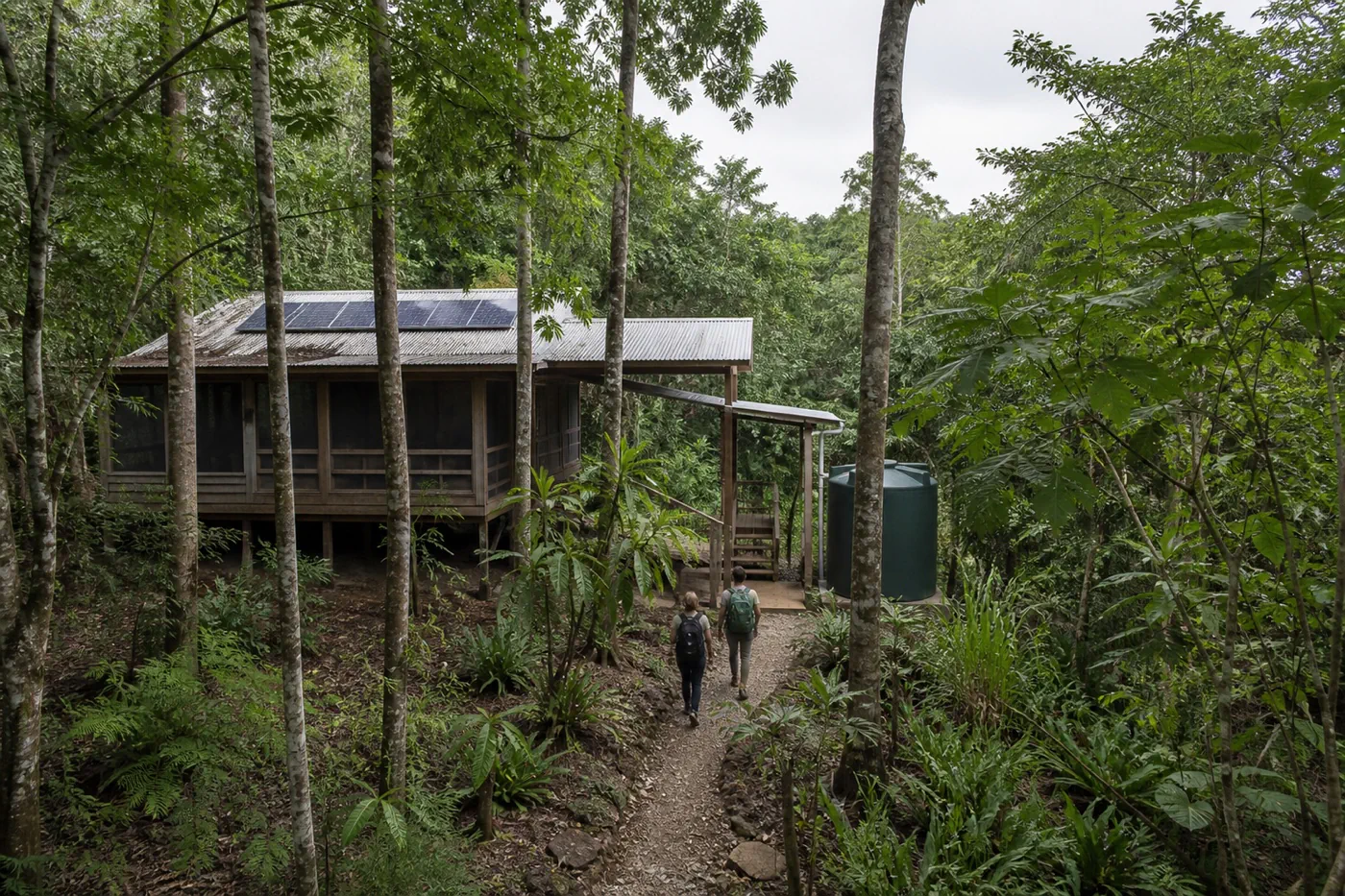
Verify the legal property and route value before evaluating the eco claim. A rainforest photograph, solar panel, refill station, or eco name cannot establish the complete operation. The room still needs a current accommodation license, usable access, safe drinking water, reliable meals, workable power, waste handling, habitat evidence, staff practice, and terms that fit the trip.
How this page was built: This guide uses the official Travel Belize accommodation and sustainability directories, Belize Tourism Board hotel licensing requirements, and the district guide. Property environmental claims remain first-party unless a named independent standard or public record supports them. Current prices, schedules, inventory, wildlife conditions, certifications, and access rules are not treated as permanent facts.
The short answer
Choose the route region first, then verify the legal property in the current accommodation system. Ask for dated evidence behind energy, water, waste, food, habitat, community, and certification claims. Compare that evidence separately from transport, room access, meals, comfort, and cancellation. A strong environmental program cannot rescue a lodge that breaks the itinerary.
Route and evidence are separate decisions
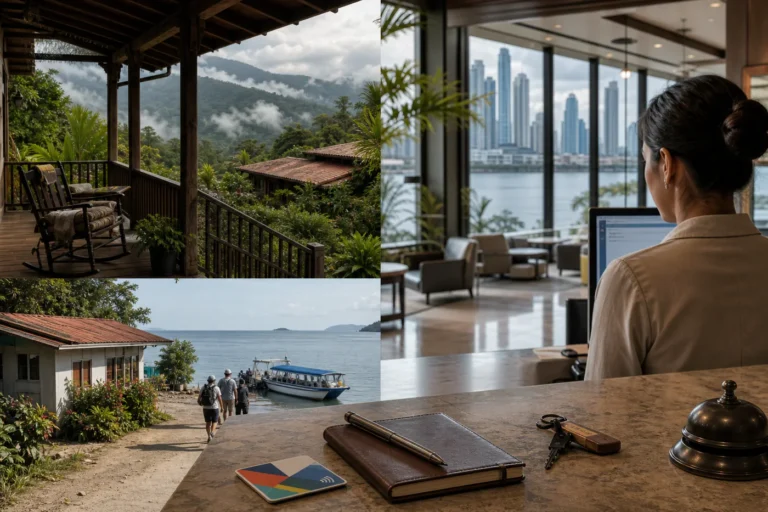
| Stay type | Route value | Evidence to request |
|---|---|---|
| Cayo town or edge | Independent meals and flexible activity pickups | License, walking route, refill water, waste and transport |
| Remote inland lodge | Forest-centered stay and bundled logistics | Transfers, habitat management, power, water, meals and staff claims |
| Hopkins or Placencia stay | Southern coast, culture and marine access | License, shoreline practice, wastewater, single-use items and dock route |
| Caye property | Northern reef base | Water source, wastewater, energy, freight, habitat and storm policy |
Begin with the legal accommodation identity
Belize Tourism Board states that accommodations must meet registration and licensing requirements and provides an accommodation directory. Match the legal property name, location, room type, and current listing. Do not assume that a booking-platform brand or villa nickname identifies the licensed entity.
A certification needs a current scope
The Travel Belize sustainability directory can identify named programs and participating properties. Record the certification body, legal entity, covered site, standard, current status, audit or renewal date, and public evidence. A badge image without a searchable record remains a property claim.
Ask how water and waste work at that location
Request the drinking-water source and treatment, refill access, wastewater system, septic or treatment oversight, solid-waste separation, organics handling, hazardous waste, guest single-use items, and what leaves the property by boat or road. Label the response as property-reported unless an independent record confirms it.
Energy evidence should include the backup system
Solar panels may supply only part of a property’s load. Ask what uses solar, the approximate share or monitoring period, battery and generator roles, air-conditioning limits, hot-water system, outages, charging access, and recent measurement. Do not convert installed equipment into an unsupported low-carbon claim.
Route utility can reduce repeated transport
Map the property to the actual guide pickup, dock, protected-area entrance, meals, pharmacy, and onward transfer. A better-located room can remove repeated vehicle or boat trips, while a remote lodge may include the same movements. Compare the complete stay rather than treating remoteness as environmental evidence.
Property evidence request
- Match the legal property name and location in the current accommodation directory.
- Verify the certification body, scope, status, audit date, and public record.
- Ask for drinking water, wastewater, waste, energy, generator, and habitat evidence.
- Map every included and separate road, boat, activity, and meal transfer.
- Request room, stairs, paths, lighting, cooling, power, and accessibility details.
- Save taxes, inclusions, weather, change, cancellation, and refund terms.
When the eco label should not influence the room
Ignore the label when the legal property is unclear, certification cannot be found, claims have no scope or date, or the location creates repeated transfers that the stay does not solve. Choose the room that fits the route and disclose which environmental facts are verified, property-reported, outdated, or still unknown.
Claim ledger and primary sources
Each source below supports a named planning fact, not a general sustainability endorsement. Marketplace inventory is commercial information and does not verify an operator’s wildlife, labor, or environmental claims.
- Travel Belize accommodation directory Used for current property identity and destination leads; recheck before publication and monthly.
- Belize Tourism Board hotel licensing Used for legal accommodation registration, licensing and operating framework; recheck before publication and quarterly.
- Travel Belize sustainability directory Used for named sustainability program and property leads; recheck before publication and monthly.
- Travel Belize district guide Used for route-region and base context; recheck quarterly.
- Belize Tourism Board licensing hub Used for current accommodation and tourism licensing starting point; recheck quarterly.
Continue with Belize route field guide, San Ignacio versus Hopkins, Caye Caulker versus Ambergris Caye.