Costa Rica Dry-Season Packing List
Affiliate disclosure: This guide contains marked affiliate links, currently to Amazon. Canopy Trips may earn a commission from qualifying purchases at no added cost to you. As an Amazon Associate I earn from qualifying purchases. Recommendations are based on published specifications and source documents, not hands-on testing.
Decision first: Pack for your route, not the phrase “dry season.” A Pacific beach week may need more sun coverage than rain gear. A cloud-forest transfer can reverse that balance. The Caribbean can stay wet when the Pacific is dry, and highland mornings can feel cool before a warm afternoon.
Use the matrix to audit what you already own. Give each item one action: pack what you own, repair or buy, or skip. Buy only when the route creates a real gap. Product examples support that decision; they do not replace sound gear.
First, map the exposure
Costa Rica’s Pacific regime normally has a defined dry season from December through March. April is transitional, and March is typically the driest and hottest month. The Caribbean has no equally defined dry season and can receive substantial rain during comparatively drier months. Mountain elevation and coastlines create further differences. These are long-term patterns, not a forecast for a particular town or date. Climate: Costa Rica’s regional precipitation regimes
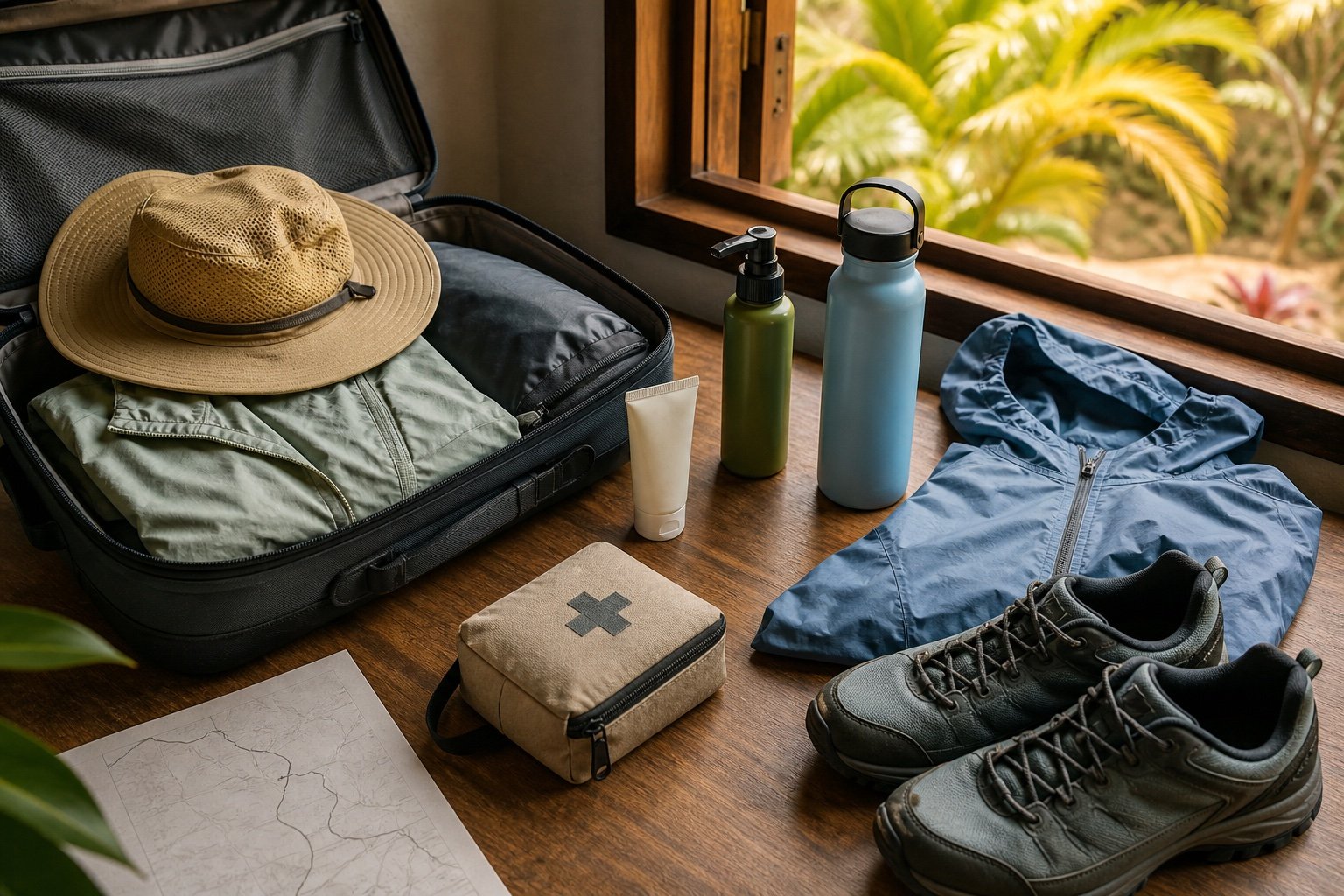
Official January-through-March guidance supports light, quick-drying layers, sunscreen, sunglasses, a hat, swimwear, insect repellent, a reusable bottle, medication, and activity-appropriate shoes. It also leaves room for a light rain layer or protected inner storage, plus a windbreaker or warm layer for mountain and cloud-forest routes. Official Costa Rica seasonal packing FAQ
- Pacific beaches and Guanacaste: prioritize sun, heat, glare, salt, and exposed transfers.
- Central Valley and highlands: plan for temperature changes, cooler mornings, and uneven walking.
- Cloud forest and northern plains: favor quick-drying layers, protected storage, grip, and secure footwear.
- Caribbean: keep rain protection, moisture management, and bite precautions close at hand.
The route-by-exposure packing matrix
Start with what you own. Repair or buy only when an item fails the route test. Skip means the item adds bulk or false confidence for this trip. A forecast, health notice, operator rule, medical need, or activity can change an action.
| Item or action | Pacific beaches and Guanacaste UV and heat |
Central Valley and highlands Rain and temperature |
Cloud forest and northern plains Insects and trail |
Caribbean Rain, insects, and boat |
Baggage mode |
|---|---|---|---|---|---|
| Sunday Afternoons Ultra Adventure Hat | Pack what you own for exposed sun. | Pack what you own for exposed walks; otherwise skip. | Pack what you own for open transfers and trails. | Pack what you own for sun breaks; keep rain gear separate. | Repair or buy only for missing coverage; light and flat-folding. |
| Blue Lizard Sensitive Mineral SPF 50 Sunscreen Lotion, 3 oz | Pack what you own for beaches and exposed transfers. | Pack what you own for daily walking. | Pack what you own; cloud does not remove UV. | Pack what you own for bright intervals and boat or beach time. | Repair or buy only if expired, unsuitable, or over the liquid limit; 3 fl oz is 89 ml. |
| Sawyer 20% Picaridin Insect Repellent, 3 oz Pump Spray | Pack what you own when lodging or activities create bite exposure. | Pack what you own according to the current CDC notice and route. | Pack what you own for shaded, humid trail or boat exposure. | Pack what you own according to the current CDC notice and route. | Repair or buy only if the exact 3-ounce pump container fits the rules; it is not an aerosol. |
| Lightweight, quick-drying layers | Pack what you own; choose airflow over heavy denim. | Pack what you own; add one warm layer if needed. | Pack what you own; favor quick drying after damp trails. | Pack what you own; prioritize moisture management. | Repair or buy for missing coverage or failed seams; skip duplicates. |
| Light rain shell or poncho | Pack what you own if the forecast or transfer needs it; skip a heavy shell. | Pack what you own for variable mountain conditions. | Pack what you own for cloud-forest moisture. | Repair or buy if reliable rain coverage is missing. | Pack a compressible layer in the day bag. |
| Warm midlayer or windbreaker | Skip on a lowland-only route unless the forecast requires it. | Pack what you own for highland mornings and evenings. | Pack what you own when elevation or wind calls for it. | Skip for warm lowland-only stays; pack for a highland add-on. | Use one layer across the trip; skip multiple sweaters. |
| Closed-toe trail or water shoes | Pack what you own for planned trails, wet access, or boat landings; otherwise skip. | Pack what you own for uneven walks and activities. | Repair or buy if grip, drainage, or secure fit is missing. | Pack what you own for wet paths, shore access, or activities. | Choose the lightest pair that meets the actual activity; wear it in transit. |
| Reusable water bottle | Pack what you own; fill after security. | Pack what you own for walking and heat. | Pack what you own; secure it against trail or boat movement. | Pack what you own; keep it accessible during transfers. | Skip a second bottle unless the itinerary or group needs it. |
| Protected inner pouch | Pack what you own for medication, documents, and electronics. | Pack what you own for transfers and weather changes. | Repair or buy if essentials lack protected storage. | Repair or buy if rain, boats, or humidity create real risk. | Use one small pouch inside the main bag; do not duplicate. |
| First-aid and medication kit | Pack what you own, including necessary medication. | Pack what you own and keep it accessible. | Pack what you own for activity needs and distance from services. | Pack what you own and protect it from moisture. | Keep medication in original or legally appropriate packaging. |
| Second pair of shoes | Skip unless wet activities, laundry limits, or foot needs justify it. | Skip if one pair covers the plan. | Repair or buy only when drying time and trail or boat demands justify it. | Repair or buy only for combined wet activity and long walking. | Skip a second pair when planned laundry solves the problem. |
This is a packing decision tool, not a safety clearance. A hat does not make heat safe. Shoes do not make a closed trail safe. Rain gear does not make lightning, surf, flooding, wildfire smoke, or rough roads safe. Follow park, guide, boat, and transport instructions.
The route changes the kit
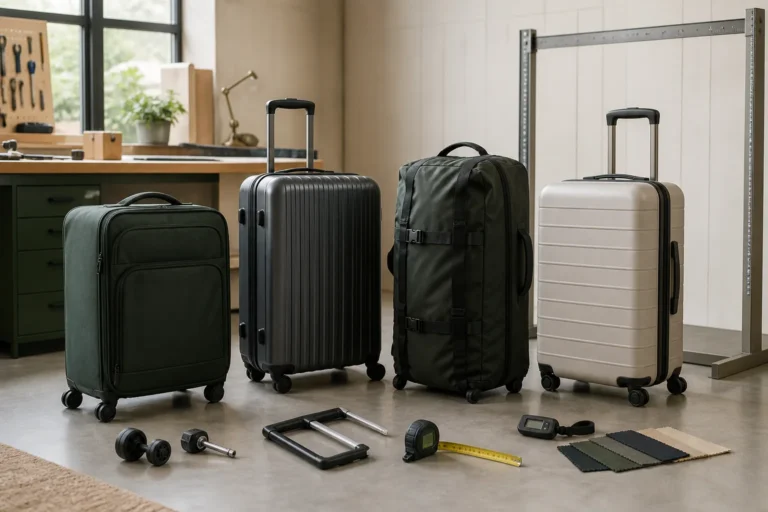
One carry-on can cover a lowland itinerary when base layers, a rain layer, and essentials do more than one job. A highland or Caribbean add-on may justify one extra layer or protected pouch. Treat baggage limits as part of route design.
Three documented product gaps, only when your kit has one
Sun protection: a hat that covers more than the forehead
If your current hat leaves your neck exposed or will not travel flat, the Sunday Afternoons Ultra Adventure Hat supplies a useful specification benchmark. The manufacturer reports a broad brim, a neck cape, UPF 50+ material including the mesh, a flat-folding design, and a PFAS-free water-repellent finish. It requires cold hand washing and line drying. Ultra Adventure Hat specifications and care
UPF 50 and 50+ are the highest classifications under AS/NZS 4399:2020, but the rating applies only to covered skin and can be reduced by wetness, stretching, wear, or chemical exposure. The product page does not identify the UPF laboratory or test standard. Its bluesign wording covers named fabrics and the sweatband, not automatically every component or the finished hat’s life cycle. AS/NZS 4399:2020 UPF ratings and use limitations bluepass and legacy bluesign designation scope
An owned broad-brim or legionnaire-style hat may already close the coverage gap. Replacement is justified only when fit, condition, or packability fails the route. The lifetime guarantee addresses manufacturing defects, excludes wear, aging, misuse, and improper care, and is processed only in the United States and Canada with shipping on approved claims. That is replacement coverage, not a field-repair promise. Sunday Afternoons Lifetime Guarantee terms
Sun exposure: a carry-on-sized sunscreen tube
Blue Lizard Sensitive Mineral SPF 50 Lotion provides a current Drug Facts and carry-on-format reference for travelers comparing sunscreen they already tolerate. The current Drug Facts label identifies mineral active ingredients, broad-spectrum SPF 50, and 80-minute water resistance. The matrix records its 3-fluid-ounce or 89-milliliter format. Directions require shaking, application 15 minutes before exposure, and reapplication after swimming, sweating, or towel drying, and at least every two hours. Sensitive Mineral SPF 50 Sunscreen Lotion specifications Current Blue Lizard Sensitive SPF 50 drug label
Water resistance is not waterproofing. The label warns against damaged skin and the eye area, directs caregivers to ask a doctor about children under six months, notes possible fabric staining, and requires protection from excessive heat and direct sun. The purchased tube’s expiration information controls. A sensitive-skin name does not predict individual tolerance. Current Blue Lizard Sensitive SPF 50 drug label Sunscreen use, water-resistance, and storage guidance
Use an in-date sunscreen that your skin tolerates and that fits the baggage plan. Replace it when the label, condition, quantity, or expiration no longer covers the trip. Pair sunscreen with shade, protective clothing, a suitable hat, and sunglasses.
Bite precautions: a pump spray with a route decision behind it
Sawyer 20% Picaridin Pump Spray is one labeled formulation to compare when current health guidance and the itinerary support a skin-applied repellent. Sawyer reports protection against mosquitoes, ticks, biting flies, and related pests, plus a shelf life exceeding 10 years when stored cool, dry, and away from direct ultraviolet light. The EPA reference label ties the formulation to registration 54287-22. Sawyer 20% Picaridin 3-ounce Pump Spray specifications EPA-accepted Insect Guard 3023 label, registration 54287-22
The exact container label controls application intervals. The EPA reference label includes bracketed alternate claims, so do not turn a manufacturer summary into a universal schedule. Do not spray the face, apply it to small children’s hands, exceed two applications per day, or ignore the eye-irritation, combustibility, storage, and nonrefillable-container warnings. CDC also describes protective clothing, suitable repellent, and, where appropriate, permethrin-treated clothing or gear. Permethrin is not for direct skin application. EPA-accepted Insect Guard 3023 label, registration 54287-22 Costa Rica Traveler View
As of August 29, 2026, the CDC page displayed a Level 2 chikungunya notice for an outbreak in northwest Costa Rica and malaria recommendations tied to Alajuela and Limón provinces. Health notices and clinical decisions can change. Refresh the guidance before publication and travel, and ask a qualified clinician about age, pregnancy, allergies, prescriptions, vaccination, and malaria questions. Costa Rica Traveler View
Use the exact container label to decide whether the product fits the traveler and route. Replace an unsuitable or expired container only after checking current health guidance and transport rules.
Transport, maintenance, and final checks
Costa Rica’s tourism authority recommends packing light because local airlines and tour operators impose luggage restrictions, and travelers may carry bags between segments. There is no universal local-flight or tour allowance. Confirm the operating carrier, aircraft, fare, tour, dimensions, weight, and whether wheels and handles count. Official Costa Rica travel-light and luggage guidance
For U.S.-regulated flights, skin- or clothing-applied repellent can fall under the medicinal and toiletry exception. Hazardous toiletry quantities are limited to 2 kilograms or 2 liters total and 500 milliliters per container. TSA screening separately limits carry-on liquids, gels, and aerosols to 100-milliliter containers. Some picaridin liquids may be flammable. International, Costa Rican, and local-carrier rules may differ. PackSafe: Sprays and Repellents
Keep medication, documents, electronics, and sunscreen protected from heat or moisture as their labels require. Hand-wash the hat in cold water and line dry it. Do not treat water-repellent fabric as waterproof. Do not refill the repellent container. Inspect shoes, seams, closures, and straps before departure.
The official U.S. recall and alert portals were searched by exact brand, product name, and, where applicable, EPA registration number on August 29, 2026. No exact match for the three researched variants surfaced. A negative search is not proof that no foreign action, retailer notice, lot issue, or future recall exists. Repeat the exact model, NDC, and registration-number checks before publication and purchase. Recalls and Product Safety Warnings database Recalls, Market Withdrawals, and Safety Alerts Current pesticide alerts
- Read a live regional forecast for every place and date. Seasonality describes patterns, not the forecast.
- Refresh the CDC Costa Rica notice and ask a clinician about traveler-specific health decisions. Costa Rica Traveler View
- Confirm park, trail, boat, guide, road, wildfire, air-quality, and operator conditions near each activity.
- Confirm baggage allowances and security rules for every carrier and transfer.
Run the matrix again after those checks. The best dry-season packing list is the smallest set that covers the actual route, preserves access to essentials, and does not confuse a product specification with a safety guarantee.
Choose the published route guide that matches the next decision: Costa Rica Green Travel Guide: Build the Route First Costa Rica 7-Day Itinerary: Two Bases, Fewer Transfers Costa Rica Rental Car vs Shuttle: Decide from the Route Monteverde Travel Field Guide: Cloud Forest Decisions